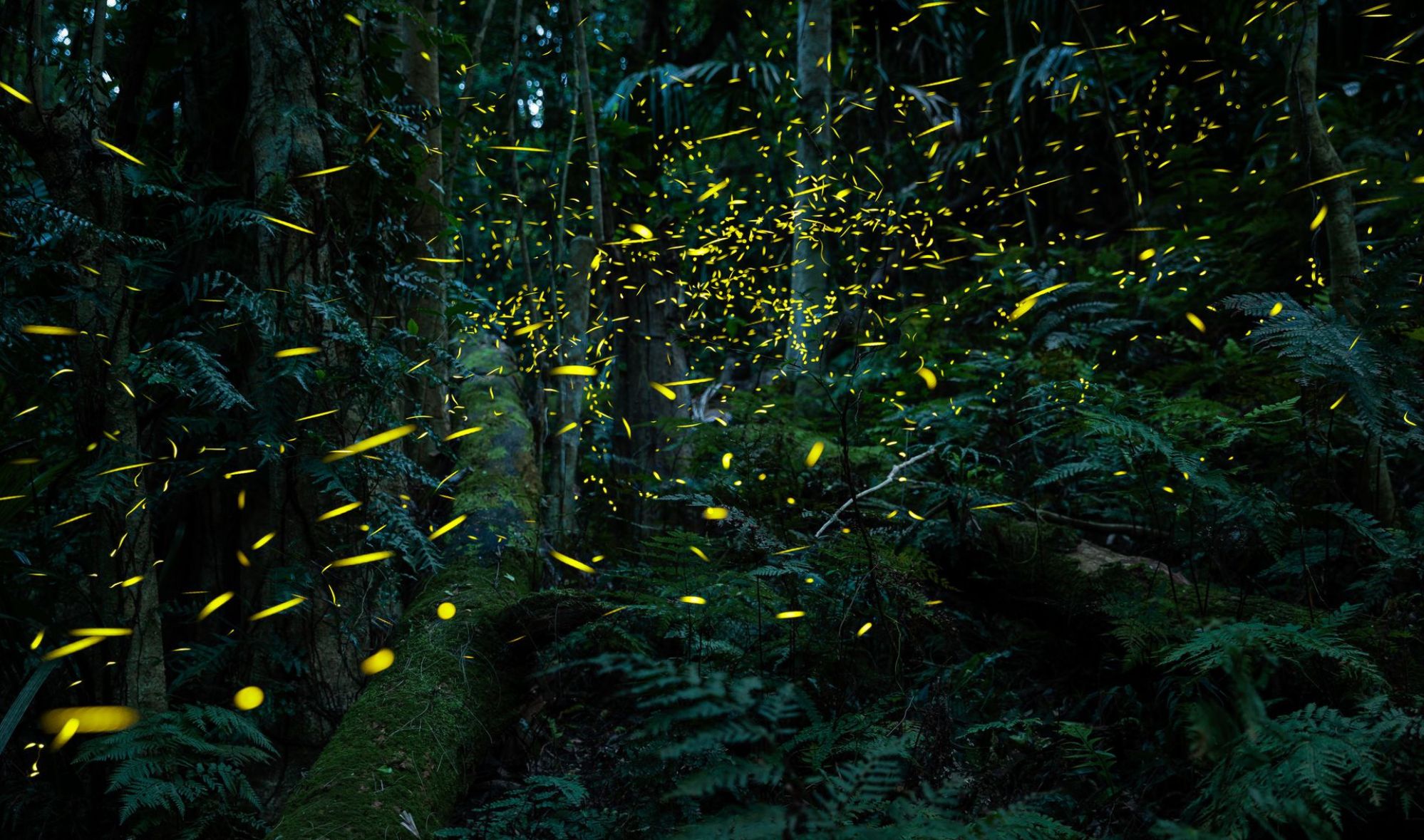
Photo: Luciole by Nicholas A Rourke
Frequently asked questions
General eligibility
Do I need to be a member of DarkSky International to enter?
No. The contest is open to everyone, regardless of membership status. The only exceptions are current staff and members of the DarkSky Board of Directors.
Are professional photographers allowed to enter?
Yes. Submissions are welcome from both professional and amateur photographers.
Can youth photographers participate?
Yes. Individuals who are 17 years old or younger at the time of submission may enter the Youth category.
Is the contest open to international participants?
Yes. Entries are accepted from participants worldwide.
How can I help share or promote Capture the Dark?
Download and use our Outreach Kit to help spread the word and inspire others to participate.
Photo editing & format guidelines
Is photo editing allowed?
Yes. Standard post-processing is allowed. However, excessive editing that alters the authenticity of the night sky may lead to disqualification.
Are composite images permitted?
Only in the Deep Sky category, where combining data from multiple nights is acceptable.
Can I crop or adjust exposure, contrast, or color?
Yes. Common adjustments such as cropping and color correction are allowed, provided the image remains natural in appearance.
Are AI-generated or AI-enhanced images allowed?
No. All entries must be original photos taken with a real camera. AI-generated or significantly AI-modified images are not accepted.
Photo descriptions & submission
How many photos can I enter?
Individual participants may submit up to three photographs per category.
Can I modify or replace my photo after submission?
No. All submissions are final. Please double-check your file and description before submitting.
Can I submit a photo that has won another contest?
Yes, as long as it has not previously won a Capture the Dark category.
What should I include in my photo description?
A strong description should include:
-
Location: City, state/province, and country (no abbreviations). Mention if it is an International Dark Sky Place.
-
Subject: Celestial objects, foreground elements, lighting, and atmospheric conditions.
-
Equipment: Camera or mobile device used (e.g., DSLR, mirrorless, smartphone, GoPro, telescope).
-
Optional: Exposure settings such as ISO, aperture, shutter speed, and whether it's a single or stacked image.
-
Story: Context or inspiration behind the image.
Descriptions should be clear and thoughtful to help judges understand the significance of your image.
Are there examples you are looking for for each category?
Yes, examples of category-specific photos are listed below:
Quality Lighting and Design
-
A warmly lit pathway with DarkSky Approved lighting under a starlit sky.
-
A campground, lodge, or resort utilizing low-intensity, down-facing lights on its facilities
-
An outdoor dining area softly illuminated with amber lighting that preserves views of the night sky.
Nightscapes
-
Anything under a star-filled sky.
-
Silhouettes of people watching an eclipse, or the aurora
-
Any experience showcasing the beauty of the natural night.
Creatures of the night—flora and fauna
-
A frog perched near its next meal
-
Sea anemones glowing in a tide pool under moonlight, captured with a long exposure and no artificial light
-
A pitcher plant illuminated by soft moonlight in a wetland, photographed using a long exposure and no added lighting to preserve the natural nighttime environment.
Deep sky observations
-
A telescope-captured image of a nebula or galaxy with no foreground, just deep space beauty.
-
A detailed image of Saturn’s rings, with transparent editing notes included.
-
A composite of the Orion Nebula with clearly labeled exposures and processing details.
The Impact of Light Pollution
-
Skyglow erasing the stars, or glare bombs from streetlights, overpowering a residential neighborhood.
-
Light pouring through windows and washing out the night sky, or overly bright security lighting spilling into natural areas.
-
Wildlife impacts by excessive nighttime lighting near new developments.
International Dark Sky Places
-
A panoramic Milky Way shot taken in a certified IDSP like Big Bend or Kerry, Ireland, must be from a listed and accredited location.
-
Stargazers using red headlamps during a meteor shower in Joshua Tree National Park.
-
The night sky reflecting over a calm lake in a certified Dark Sky Reserve, with no artificial light sources in view.
Mobile Nighttime Photography
-
A starry sky or moonrise captured with a cell phone or GoPro, no DSLR or mirrorless cameras allowed.
-
A time-lapse frame of the Milky Way using a smartphone mounted on a tripod.
-
A handheld phone image of a star party, the crescent moon rising over a dark landscape.
Young Astrophotographers
-
Any photo from the above categories taken by someone 17 or younger
-
A backyard shot of the Milky Way with minimal editing and transparency about processing.
-
A capture of nocturnal wildlife under a starry sky, taken with care for ethical wildlife photography.
Nighttime Adventures
-
A continuous ribbon of light snakes up the peak as mountaineers' headlamps trace a glowing path beneath the brilliant Milky Way.
-
A silhouetted mountain biker pauses on a desolate ridge, dwarfed by the vast, arcing bands of the galactic core.
-
The glare of high beams shatters a hiker’s night vision, instantly erasing the trail and the stars in a disorienting flash.
Judging & use of images
Who judges the contest?
A panel of experts in photography, astronomy, conservation, and design. Judging is conducted blind.
What criteria are used to judge the photos?
Judges evaluate entries on visual impact, technical skill, creativity, and alignment with the mission to protect the night from light pollution.
Can I win in more than one category?
Yes. If you submit to multiple categories, you may win or place in more than one.
What happens if my photo wins?
Winning images will be featured in Nightscape magazine, DarkSky’s blog, website, social media, newsletters, global press releases, and more. Winners also receive prizes from sponsors and full photo credit.
Do I retain rights to my photo?
Yes. Photographers retain full ownership. By entering, you grant DarkSky International a non-exclusive license to use the image in promotional and educational materials with proper credit.
Can my photo be disqualified?
Yes. Photos may be disqualified for rule violations, including watermarks, AI use, overediting, or submitting to an incorrect category.
Timeline & technical support
What is the submission deadline?
June 30 at 11:59 p.m. PDT.
What if I experience technical issues during upload?
Contact engagement@darksky.org for assistance.
When are winners announced?
Winners will be announced in August. All participants will be notified by email.
Will I receive feedback on my submission?
Due to the volume of entries, individual feedback is not guaranteed. Winning and finalist images will be shared publicly.
Technical details & accessibility
Are drone photos allowed?
Yes, as long as the photo complies with contest guidelines and was taken legally.
Do I need to include EXIF data?
No. Including exposure details in your description is optional but highly encouraged.
Are black-and-white photos allowed?
Yes. Black-and-white images are welcome, as long as they are original in-camera captures.
Legal & permissions
Do I need model or property releases?
Yes. If identifiable individuals (especially minors) are present, or if the photo was taken on private property, ensure you have appropriate permissions.
Can I submit photos taken on public land?
Yes, provided you followed the rules of the location.
Social sharing & community
Can I share my entry on social media?
Yes. Use #CaptureTheDark and tag @darksky_intl. Social sharing does not influence judging.
Will I be notified if I’m a finalist?
Yes. Finalists and winners will be contacted in August before the public announcement.
Supporting the cause
Can I donate to support the contest or DarkSky International?
Yes. Donations can be made at https://darksky.org/ways-to-give/. Mention in the notes if you wish to support the contest directly.
Are donations tax-deductible?
Yes. DarkSky International is a 501(c)(3) nonprofit. A confirmation email will be sent for your records.
How else can I support DarkSky?
-
Share your photos and our content using #CaptureTheDark
-
Advocate for responsible lighting in your community
-
Become a DarkSky Advocate
-
Follow us on social media and sign up for our newsletter
Questions? Please contact engagement@darksky.org.
DarkSky International (formerly the International Dark-Sky Association) is committed to fostering an inclusive, welcoming environment for all. We celebrate diversity across all backgrounds and identities as we unite under the shared mission to protect the night.